Written by gary@nbkaison.com
How Ambient and Inlet Water Temperature Affect Commercial Ice Machine Output
Commercial ice machine output falls as ambient air or inlet water temperature rises because the refrigeration system must remove and reject more heat during each cycle. Ambient air mainly affects condenser heat rejection in air-cooled equipment. Inlet water changes the load that must be cooled before freezing begins. The size of either effect depends on the machine, condenser, ice setting, airflow, water system, and stated test conditions. Buyers should compare production data recorded near the planned site conditions, then confirm how the supplier measured each result. A single universal derating percentage cannot represent every commercial ice maker or installation.
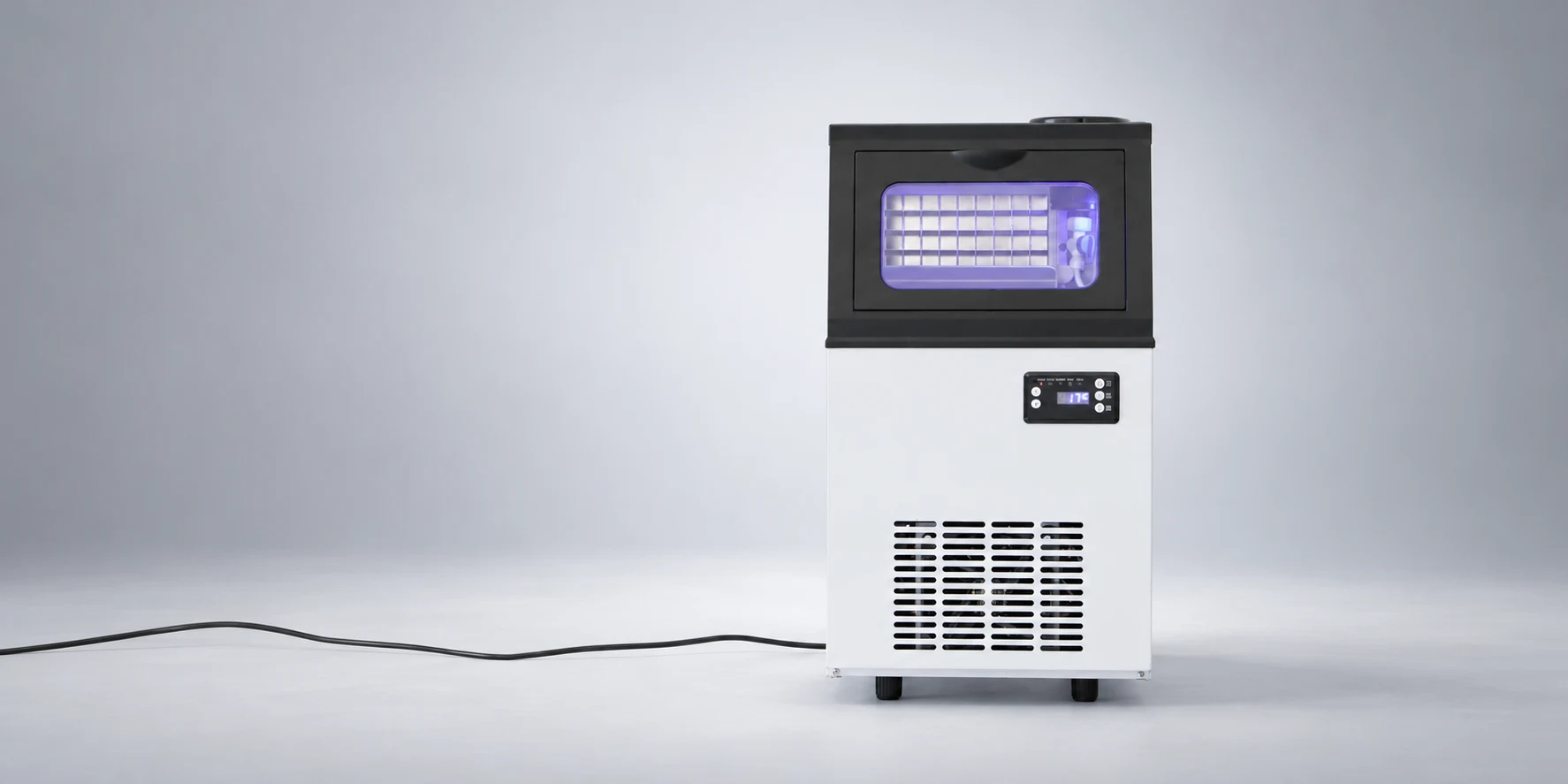
How Temperature Changes Commercial Ice Machine Output
Heat load changes what one complete ice-making cycle can deliver.
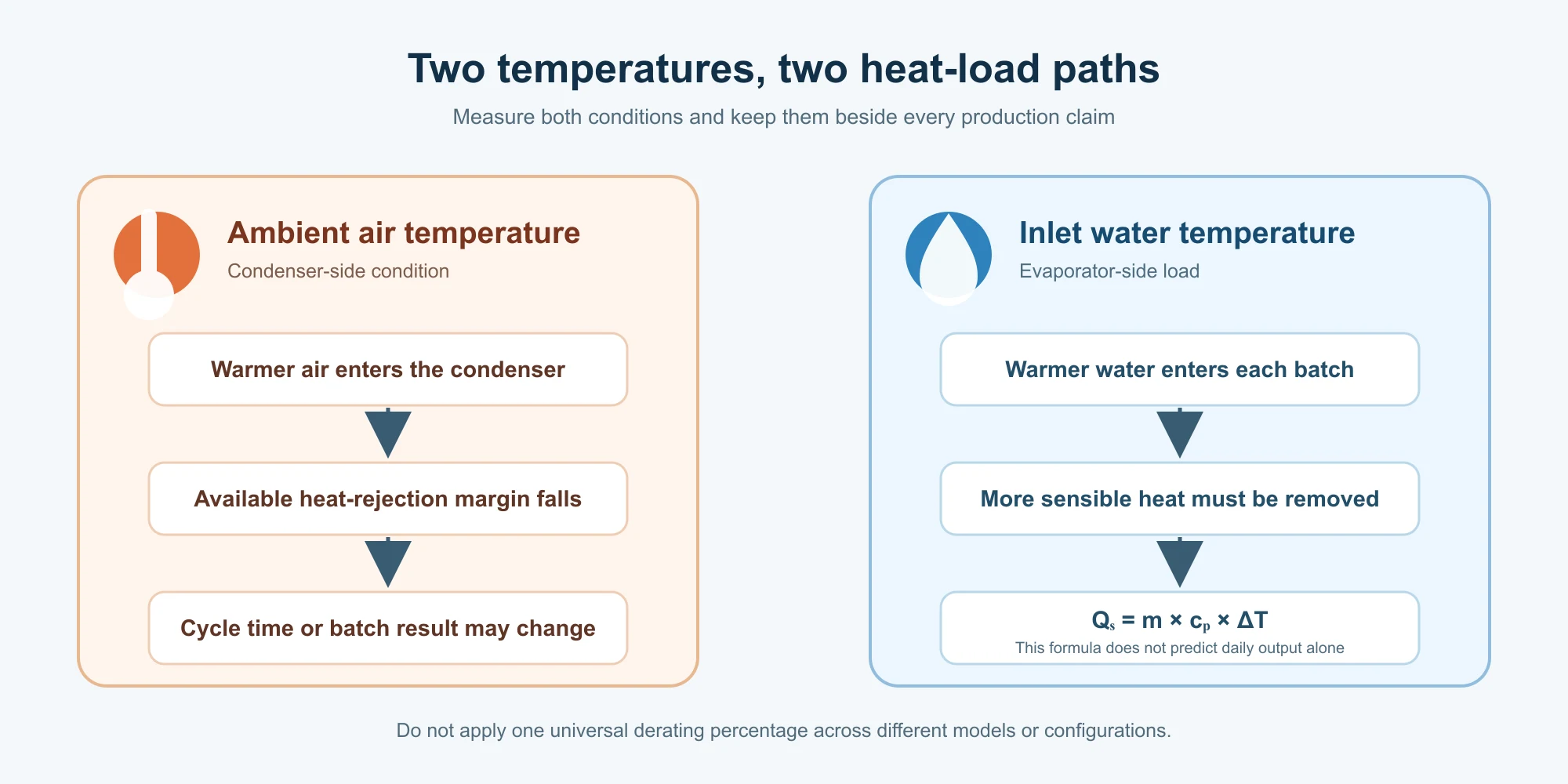
Ambient air controls condenser heat rejection
An air-cooled machine transfers refrigeration heat to the surrounding air. As that air becomes warmer, the condenser has a smaller temperature difference available for heat rejection, which can raise condensing pressure and extend the time needed to complete a batch. Airflow matters too. A blocked intake, dirty condenser, short clearance, or recirculated exhaust can make the machine experience hotter air than the room thermometer reports.
Buyers comparing a commercial ice maker should therefore record temperature at the machine's air intake during the busiest period. Measure it there.
Inlet water adds a separate refrigeration load
Warmer feed water brings more sensible heat into each batch. The relationship can be expressed as Qs = m x cp x delta T, where water mass, specific heat, and the required temperature reduction determine the sensible cooling load before phase change.
Use this equation to understand the added heat load, not to predict daily production by itself. Model-specific output also depends on compressor capacity, evaporator design, harvest control, incoming flow, ice thickness, and condenser performance.
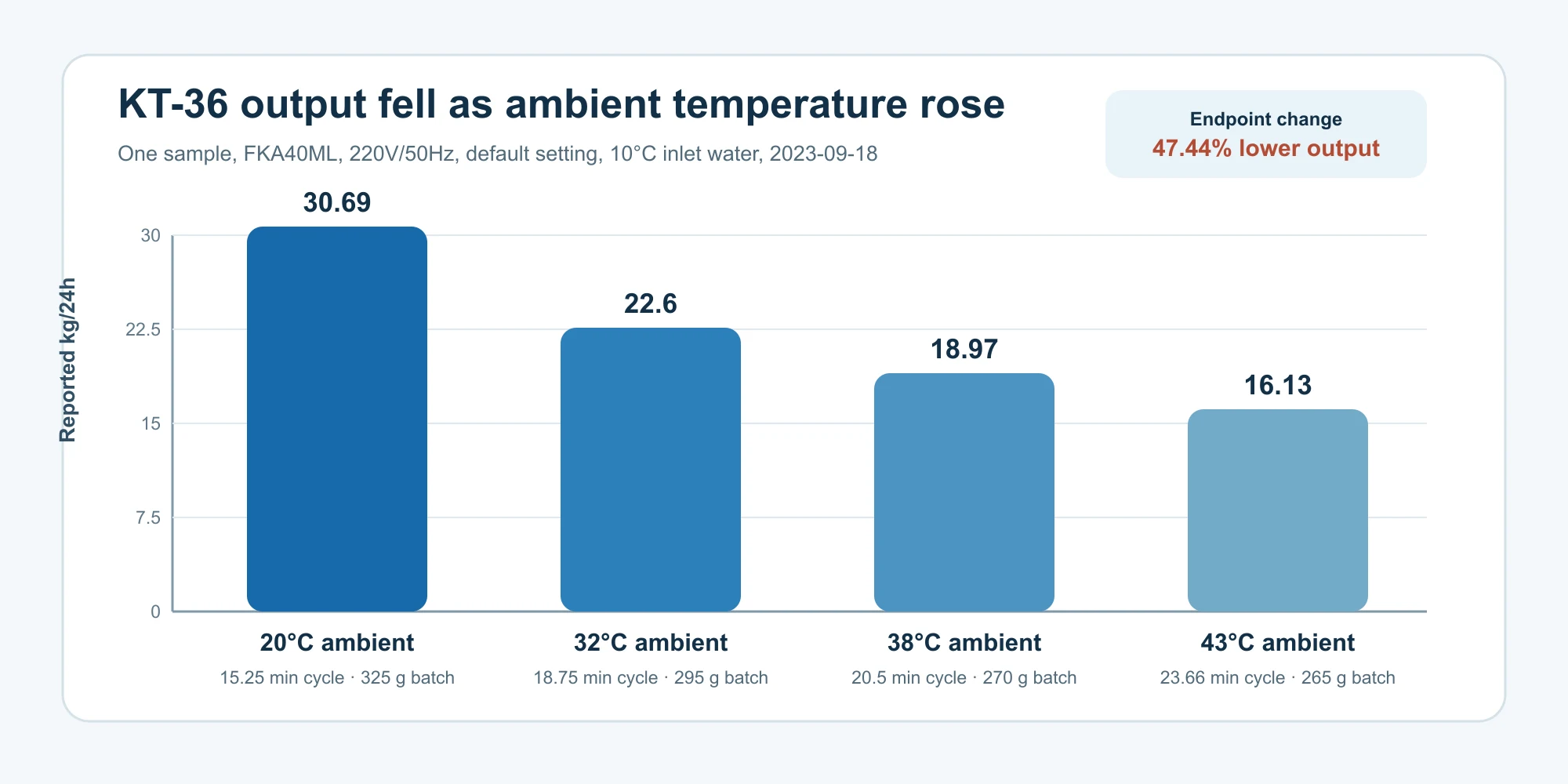
KT-36 Output at Four Ambient Temperatures
The KT-36 test shows how output changed as room temperature increased.
The test held inlet water at 10 degrees C
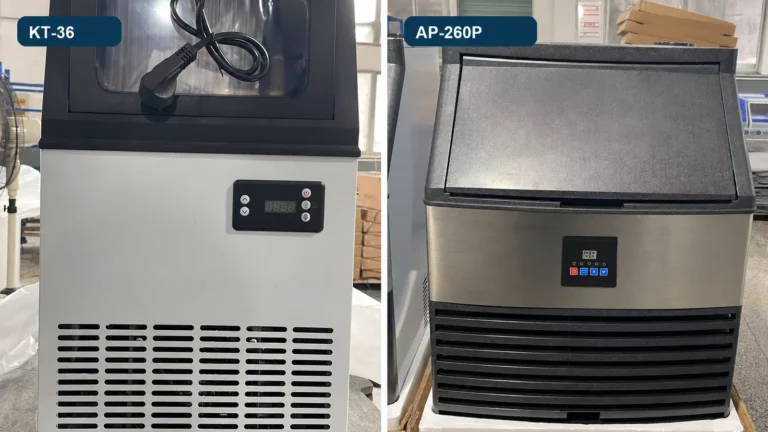
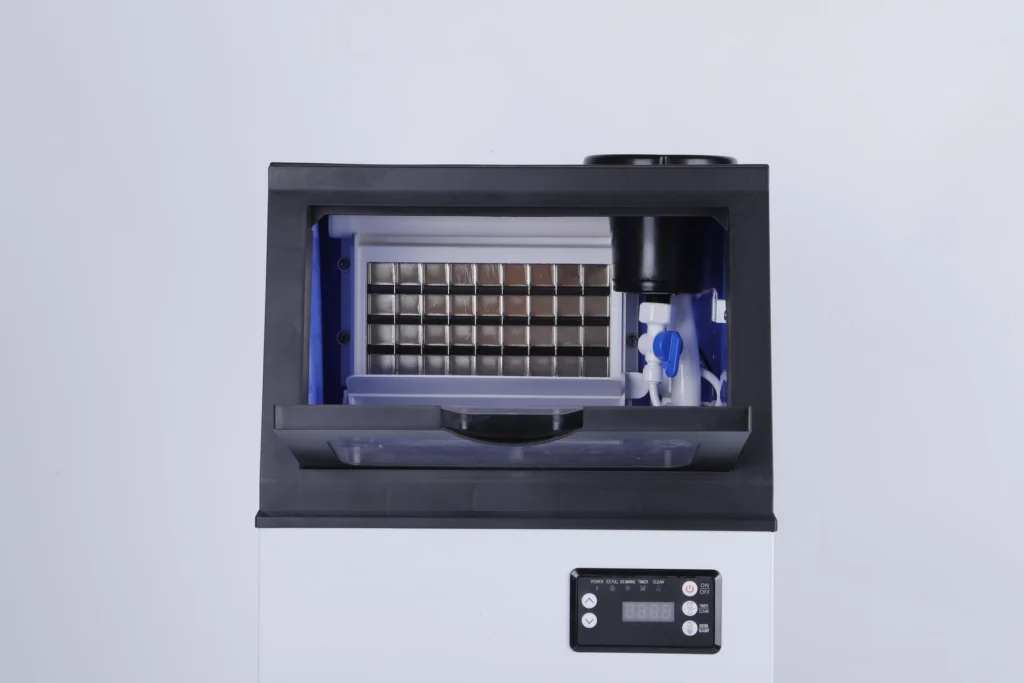
A KAISON laboratory test dated September 18, 2023 used one KT-36 sample with a 4 by 9 cube grid, FKA40ML compressor, 220V/50Hz supply, 203.8W stated power, default setting, and 10 degrees C inlet water. The team changed ambient temperature across four conditions and recorded complete cycle time, batch weight, cube weight, and calculated daily output while holding inlet water and the default setting constant.
These results apply to the tested KT-36 configuration and recorded operating conditions. When requesting a quotation, compare them with the exact compressor, electrical supply, condenser arrangement, ice setting, and expected site temperatures offered for your project.
Higher ambient temperature coincided with longer cycles
The measured pattern is clear. Ambient temperature rose from 20 to 43 degrees C, complete cycle time increased from 15.25 to 23.66 minutes, and reported cycle-derived output fell from 30.69 to 16.13 kg per 24 hours.
Using the test endpoints, the calculated output difference is 47.44 percent. Batch weight fell 18.46 percent, from 325 to 265 grams, while the complete cycle became 55.15 percent longer. This trend shows why capacity should be checked near the expected installation temperature.
Use the four-condition test to understand the temperature trend, then review the KT-36 product page and confirm performance for the exact voltage, compressor, and condenser option offered for your market.
| Ambient air | Inlet water | Complete cycle | Batch ice weight | Single-cube weight | Reported output |
|---|---|---|---|---|---|
| 20 degrees C | 10 degrees C | 15.25 min | 325 g | 9.03 g | 30.69 kg/24h |
| 32 degrees C | 10 degrees C | 18.75 min | 295 g | 8.19 g | 22.6 kg/24h |
| 38 degrees C | 10 degrees C | 20.5 min | 270 g | 7.5 g | 18.97 kg/24h |
| 43 degrees C | 10 degrees C | 23.66 min | 265 g | 7.36 g | 16.13 kg/24h |
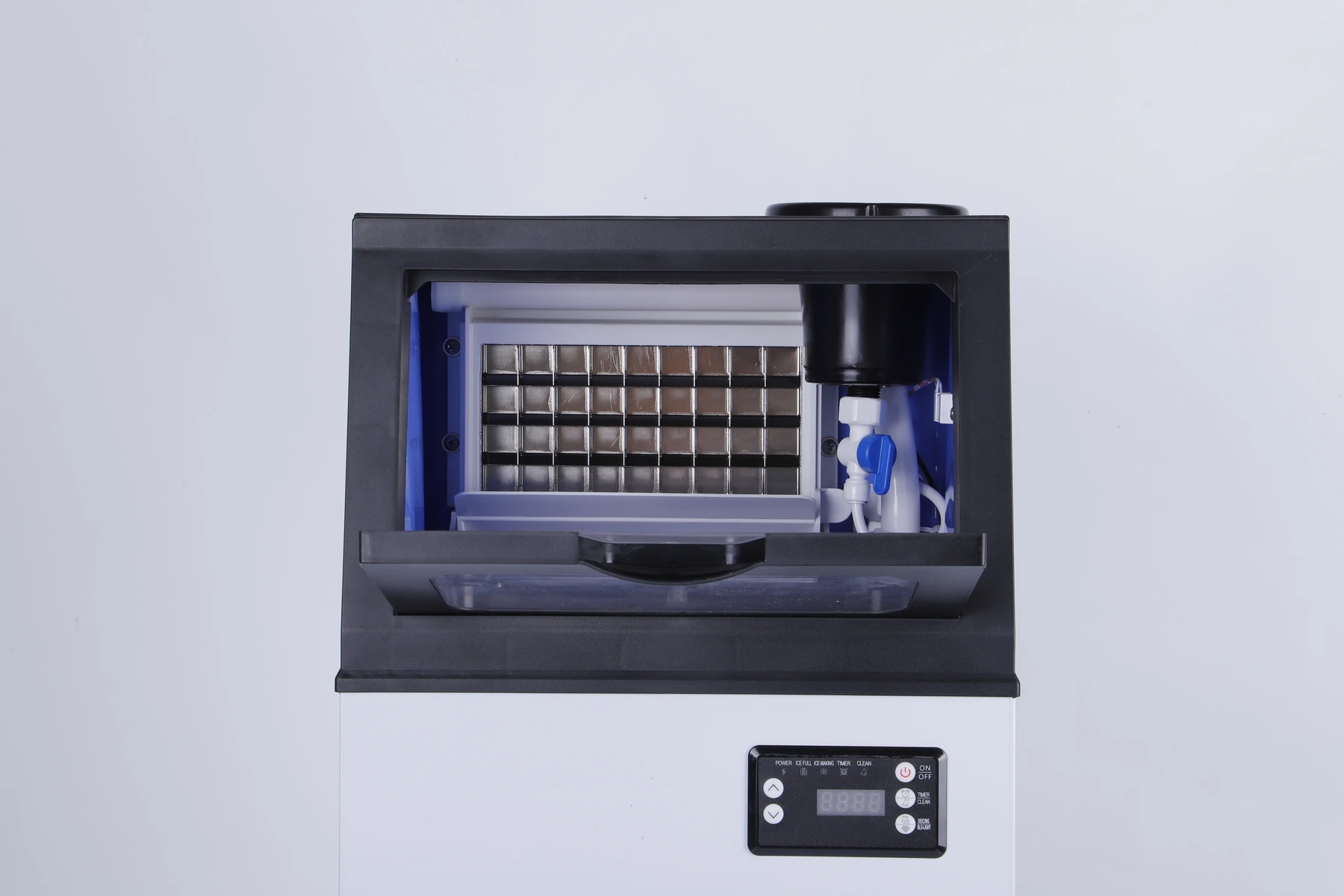
Match every capacity figure to the machine configuration used to produce it. The quality-control process explains the factory inspection steps, while the cube ice machine range helps buyers compare current models and output classes.
Calculate Daily Output from a Complete Cycle
Cycle-derived output uses batch weight and the entire recorded cycle.
Apply one consistent calculation
Output in kg per 24 hours equals batch weight in kilograms multiplied by 1,440, then divided by complete cycle time in minutes. For the 20 degrees C condition, 0.325 x 1,440 divided by 15.25 equals 30.6885 kg per 24 hours, rounded to 30.69 in the test results.
For a consistent daily-output calculation, use the complete recorded cycle time and its corresponding batch weight.
Keep calculated output separate from storage
A cycle calculation assumes repeated operation at the measured pace and does not account for bin-control stops, cleaning, demand interruptions, water restrictions, changing room conditions, or a continuous twenty-four-hour observation.
The distinction also affects layout choices. A built-in-bin ice machine combines production and storage in one cabinet, while a separate-bin ice machine lets buyers size the production head and reserve capacity as separate decisions.
Treat Inlet Water Temperature as a Separate Variable
The KT-36 records do not show the effect of inlet water alone.
Keep the machine configuration unchanged
A separate record at 32 degrees C ambient and 20 degrees C inlet water uses an FKA46ML compressor, while the 10 degrees C series uses FKA40ML. Because both compressor and water temperature change, this is not a like-for-like water-temperature comparison.
To compare inlet water temperatures, keep the machine, compressor, voltage, ice setting, ambient condition, airflow, flow rate, and measurement method unchanged while testing at least three stable, complete cycles for each condition. Change only the inlet water temperature.
Ask for water-temperature data that matches the site
A cafe or bar may receive much warmer mains water during summer than during a mild-season factory test. Buyers should record peak inlet temperature at the planned connection, then request performance data for the offered configuration at a nearby condition.
The cafe ice machine and bar ice machine pages can help narrow the product type. Use the expected summer water temperature when requesting performance data for either application.
Compare Rated Capacity with Site Output
A daily capacity number needs a condition and a measurement method.
Separate ratings, cycle calculations, and field records
The AHRI 810 performance-rating standard provides a formal framework for rating automatic commercial ice makers. A supplier's laboratory cycle calculation and a customer's field log answer different questions, even when all three use kg per 24 hours.
KAISON buyers should request the model, compressor, condenser type, voltage, frequency, refrigerant, ice setting, ambient air, inlet water, batch weight, cycle definition, test duration, and calculation method beside the proposed capacity. This information makes quotations easier to compare and keeps configuration differences visible before approval.
Match performance data to the operation
A restaurant ice maker may face kitchen heat and concentrated meal-period demand. A hotel ice machine may experience several draw periods, remote service access, and different reserve requirements across floors or outlets.
Record the busiest observed demand window. Then compare the supplier's documented production near the expected air and water conditions with the recovery time and storage reserve chosen for that operation.
Match Condenser Type to the Installation
Condenser selection changes which site temperature deserves the closest attention.
Air-cooled equipment depends on clean, separated airflow
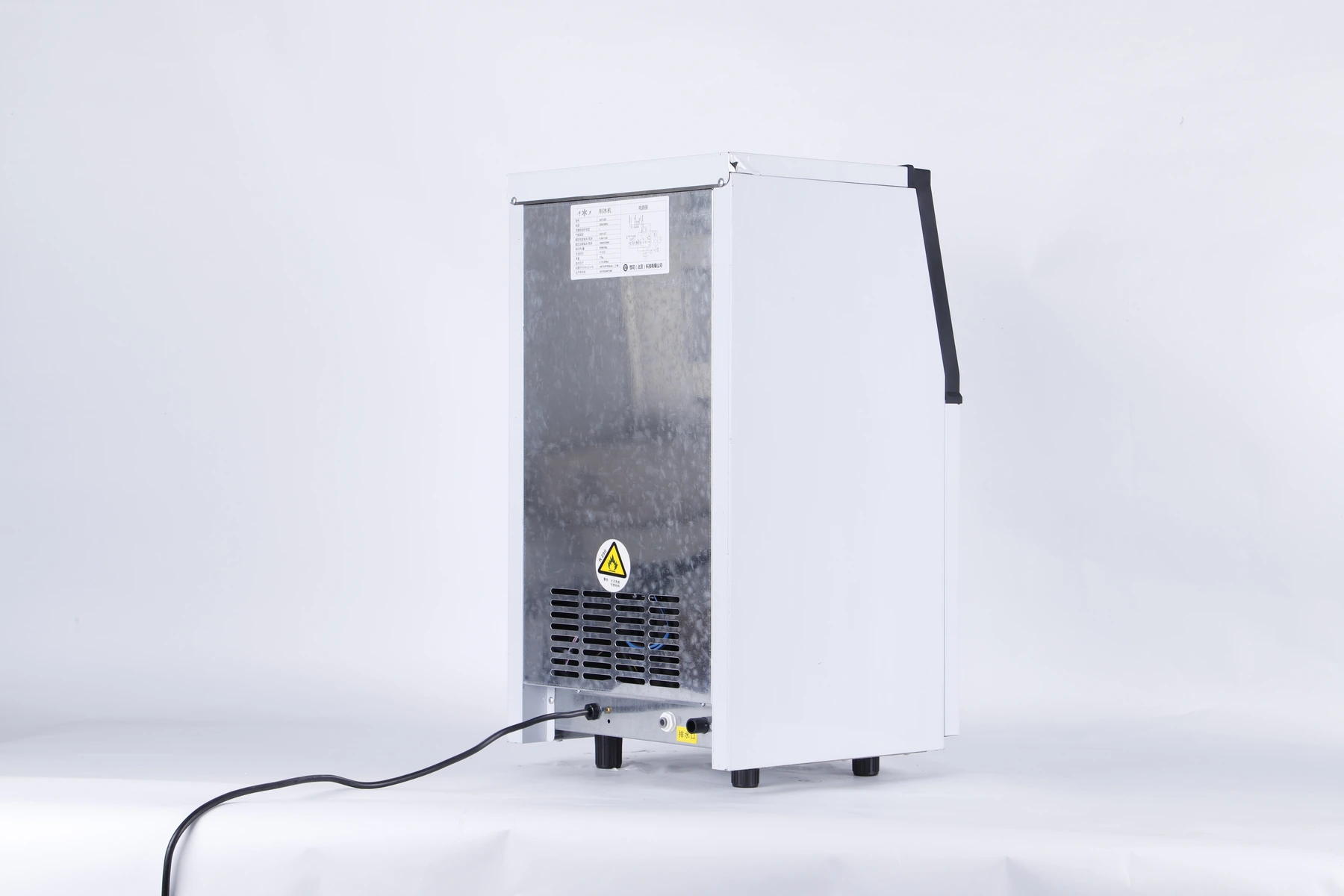
An air-cooled ice machine rejects heat into moving air across its condenser. Intake temperature, exhaust recirculation, grease, dust, and clearance determine the air reaching the condenser, while a remote condenser changes both the heat-rejection location and the installation scope for the project.
Check the actual airflow path. Measure the air entering the condenser, especially when cooking equipment or a confined cabinet may create a local hot zone that the wall thermostat misses.
Water-cooled equipment shifts the condenser-side check
A water-cooled ice machine uses condenser water instead of room air for that heat-rejection path. Buyers must verify the approved water supply, entering-water condition, flow, pressure, discharge arrangement, treatment needs, and local water restrictions for the quoted model.
Some larger configurations, including the AP-300P product family, may be offered with different condenser arrangements. Confirm the exact ordered build because an air-cooled result cannot be transferred automatically to a water-cooled version.
Diagnose Low Output Before Replacing Equipment
Temperature is one of several possible output causes.
Record operating conditions before changing parts
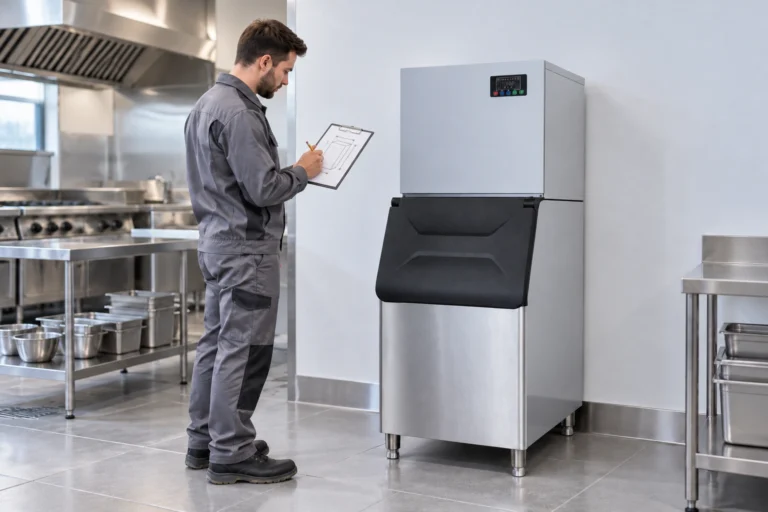
Start with ambient temperature at the intake, inlet water temperature, voltage, complete cycle time, batch weight, ice thickness, bin-control behavior, error codes, and a photograph of the installation. Repeat those observations during the low-output period.
The service team can compare that record with the offered configuration and factory documents to separate a temperature-related capacity drop from a maintenance, control, water-supply, or installation problem before replacing major components. A dirty condenser, restricted airflow, scale, low water flow, filter blockage, changed ice setting, or premature bin-control stop can produce the same symptom as high ambient temperature.
Escalate unsafe or persistent faults
Stop operation when the machine shows electrical damage, refrigerant leakage signs, abnormal pressure protection, repeated overheating, or water leakage near energized parts. Qualified service personnel should diagnose those conditions and follow the applicable manual and local requirements.
The certification library helps buyers locate compliance documents, but a certificate does not diagnose output. Use service measurements for the fault and certification documents for the exact market and ordered configuration.
Specify Site Conditions Before Requesting a Quote
A useful RFQ turns site temperatures into a testable purchasing requirement.
Send one complete operating brief
Provide peak-day ice use, the busiest draw period, desired reserve, intake-air temperature, peak inlet-water temperature, electrical supply, ice type, and condenser preference. Add water, drainage, clearance, destination-market, and installation details.
The supplier can then recommend a suitable product family, match performance data to the offered configuration, and explain how requested changes affect dimensions, power, refrigeration components, installation documents, or certification scope. Review OEM and ODM options separately from the standard configuration.
| RFQ field | Buyer entry | Supplier response required |
|---|---|---|
| Ambient air at condenser intake | degrees C, time and location | tested or rated condition used |
| Peak inlet water | degrees C and measurement point | nearest available test condition and stated differences |
| Peak-day demand | kg per day | proposed documented output |
| Busiest draw period | kg during stated hours | recovery and storage response |
| Electrical supply | voltage, phase and frequency | exact ordered configuration |
| Condenser arrangement | air, water or remote | heat-rejection and utility requirements |
| Performance reference | test report, rating sheet or field record | title, date and tested configuration |
Confirm the configuration in writing
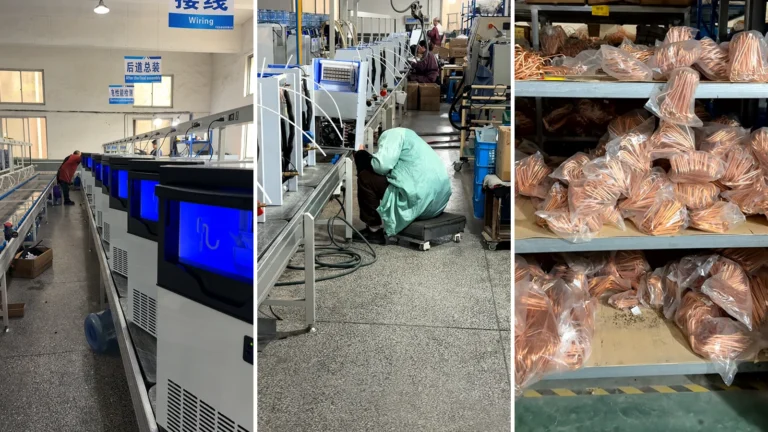
KAISON's manufacturing overview introduces the factory and production scope. For the quoted machine, request a datasheet, nameplate example, installation drawing, relevant test report, warranty scope, spare-parts plan, and acceptance checklist.
Send the completed operating brief through the technical inquiry page. Our team can then recommend a configuration, provide available output data near the planned temperature range, and identify the specifications covered by the quotation.
- A 2023-09-18 KT-36 sample produced a reported 30.69 kg/24h at 20 degrees C ambient and 10 degrees C inlet water.
- The same sample recorded 16.13 kg/24h at 43 degrees C ambient with inlet water still held at 10 degrees C.
- AHRI 810-2025 provides a formal performance-rating framework for automatic commercial ice makers.
- Cycle-derived output equals batch weight multiplied by 1,440 and divided by the complete cycle time in minutes.
- A valid inlet-water comparison keeps the machine configuration and ambient condition unchanged.
- Buyers should place measured site temperatures, requested performance data, and the test basis directly in the RFQ.
Frequently Asked Questions
Temperature questions need answers tied to equipment and test conditions.
Does a hotter room reduce commercial ice machine output?
It can reduce output when higher intake air temperature makes condenser heat rejection more difficult, particularly for self-contained air-cooled equipment. The size of the reduction depends on the refrigeration system, condenser condition, airflow, ice setting, and machine controls. Measure air where it enters the condenser during the affected period. Compare that reading with model-specific performance information and the permitted operating range in the current manual. A room thermostat located elsewhere may miss exhaust recirculation or a local hot zone around the cabinet.
Does warmer inlet water make an ice machine slower?
Warmer feed water increases the sensible heat that must be removed before the water reaches its freezing point. The added load may extend a cycle or change the amount harvested, but the percentage varies by model and operating condition. Compare water temperatures with the machine, compressor, ambient condition, voltage, setting, flow, and measurement method unchanged. Record repeated complete cycles at each temperature so the result reflects the water-temperature change instead of a different equipment configuration.
Which matters more, ambient air or inlet water temperature?
The answer depends on condenser type, site conditions, and the machine's design. Ambient intake air directly affects an air-cooled condenser, while inlet water affects the load entering every batch. One site may have a severe exhaust-recirculation problem and cool feed water; another may have open airflow and unusually warm mains water. Record both values during peak operation. Ask the supplier for condition-based performance data covering the offered configuration instead of ranking one temperature factor without measurements.
How much output is lost for each degree of temperature increase?
There is no single per-degree loss that applies across all commercial ice machines. Capacity response is not necessarily linear, and it changes with the compressor, condenser, refrigerant circuit, controls, ice thickness, airflow, and water conditions. The KT-36 laboratory series compares four ambient points while holding inlet water at 10 degrees C. Use that series to understand the tested model's trend, then request data for the configuration and temperature range planned for your installation.
Why is actual output lower than the rated daily capacity?
Rated capacity belongs to a stated test procedure or declared condition. Field operation adds changing room temperature, changing feed-water temperature, bin-control stops, demand interruptions, scale, condenser fouling, ventilation limits, and utility variation. Storage also affects what staff perceive as available ice without changing the machine's production rating. Compare like with like. Identify the rating basis, log full cycle time and batch weight on site, and separate calculated daily output from a continuous production test before deciding that the equipment is undersized.
Are air-cooled ice machines more sensitive to room temperature?
Air-cooled models use surrounding air for condenser heat rejection, so the temperature and cleanliness of that airflow directly affect operation. Water-cooled machines shift the condenser-side requirements to entering condenser water, flow, pressure, treatment, and discharge. A water-cooled design is not automatically the higher-output or lower-cost choice. Compare the offered configurations, available utilities, local water rules, installation limits, and performance data before selecting the condenser arrangement.
Is cycle-derived output the same as a 24-hour production test?
No. Cycle-derived output extrapolates a measured batch across 1,440 minutes using the complete cycle time. A continuous 24-hour test observes actual operation across the full day and can capture control stops, changing conditions, water interruptions, and other events. KAISON's September 18, 2023 KT-36 test calculates daily output from cycle time and batch weight. Check which method a capacity figure uses before comparing it with a formal rating or an operating-site production log.
What should a buyer send before requesting a model recommendation?
Send measured peak-day use, the largest draw during a stated period, desired reserve, condenser-intake temperature, peak inlet-water temperature, electrical supply, water and drainage details, available clearance, ice type, destination market, and installation photographs. Include any required test standard or acceptance method. Ask the supplier to return the exact model and configuration, applicable performance data, installation requirements, included documents, warranty terms, and any site information still needed. This creates a clear basis for selection and a more accurate technical quotation.