KAISON Team
Choose water treatment using a current water report and the requirements for your ice machine. Hardness, total dissolved solids (TDS), and conductivity measure different characteristics; one reading cannot determine the right treatment on its own. This guide explains what to review with your supplier before installation.
Use Commercial Ice Machine Water Quality Data First
Start with the site water report and machine record.
Do not guess. A useful brief identifies the water source, test date, laboratory or meter method, exact model, ice type, condenser configuration, daily operating pattern, planned treatment, and drain arrangement before any component is selected.
Record the machine, water source, and operating pattern
The machine record matters first. A buyer comparing commercial ice makers should separate beverage-service demand from display, preparation, packing, and other uses that share the water and ice system.
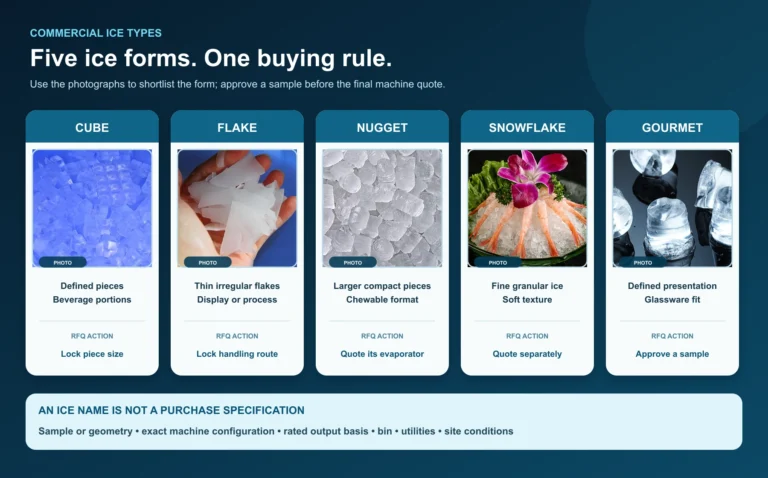
Record whether the proposal is for cube ice machines or flake ice machines, because water path, production pattern, bin arrangement, and service access can change the engineering questions. Capture the water source as municipal supply, well, stored water, or another documented source. Add the report date because water conditions can change after seasonal, treatment, plumbing, or source changes.
Keep ice-making water separate from condenser decisions
Cooling configuration changes the site review. An air-cooled ice machine needs an airflow and heat-rejection review, while a water-cooled ice machine also needs an approved condenser-water supply and discharge arrangement.
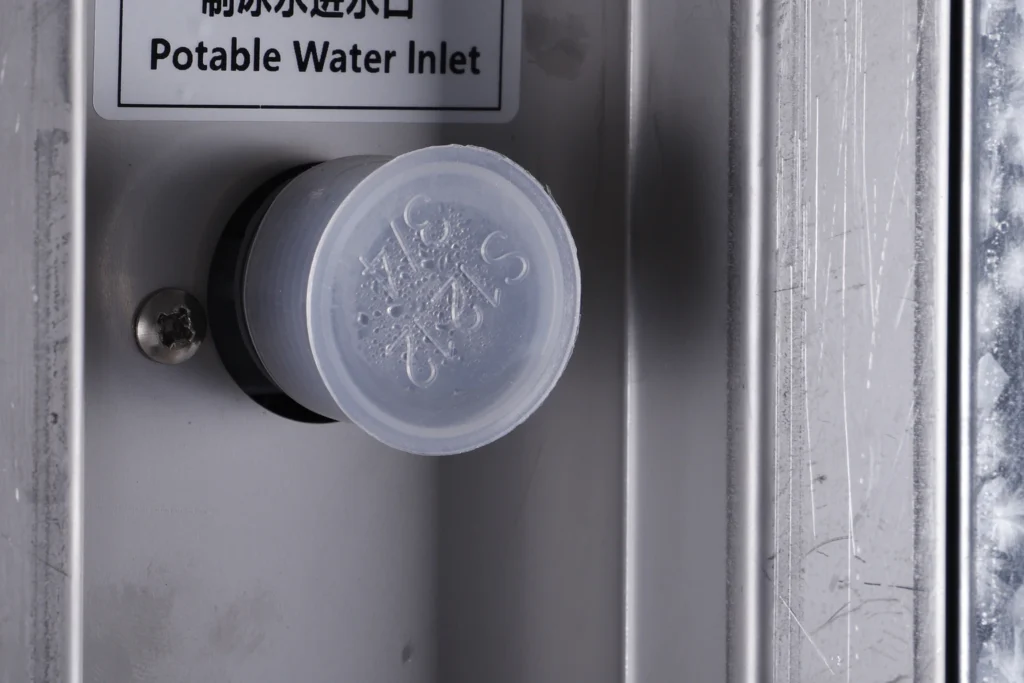
Do not merge those two water paths. The water that becomes ice needs its own treatment, pressure, and hygiene review. A condenser-water circuit can add different utility and drainage constraints. Confirm the selected configuration on the order sheet before a plumber sizes pipework or a treatment provider recommends equipment.
| Record | What it identifies | Decision it supports |
|---|---|---|
| Exact model and manual revision | Machine and controller scope | Applicable installation and service instructions |
| Water source and report date | Where the sample came from | Whether retesting is needed |
| Hardness result and method | Calcium and magnesium contribution | Scale-risk discussion |
| TDS or conductivity result and method | Dissolved-solids indication | Broader water-chemistry review |
| Existing treatment and filter model | Installed treatment claim | Compatibility and service review |
| Pressure, flow, and drain layout | Available water delivery and discharge route | Commissioning acceptance |
Distinguish Hardness, TDS, and Conductivity Before Treatment
These measurements answer different water-management questions before treatment is chosen.
Hardness is not TDS. The U.S. Geological Survey describes hardness as dissolved calcium and magnesium. Total dissolved solids includes a broader group of dissolved substances. A conductivity reading can indicate dissolved ionic material. It does not identify every substance or prove that water suits a particular machine.
Together, these results help a buyer decide which scale concern, dissolved-material question, test-method issue, or treatment claim needs further investigation before selecting, installing, and maintaining an ice-machine water system safely. A water sample can carry dissolved solids beyond calcium and magnesium, and a hardness result does not describe every dissolved salt. USGS water-quality guidance treats specific conductance as a TDS surrogate, not as a universal equipment approval test.
Use hardness to ask scale-related questions
Hardness focuses the mineral conversation. Dissolved calcium and magnesium can form deposits when hard water is heated, so the report should trigger a review of scale exposure, cleaning access, and treatment compatibility.
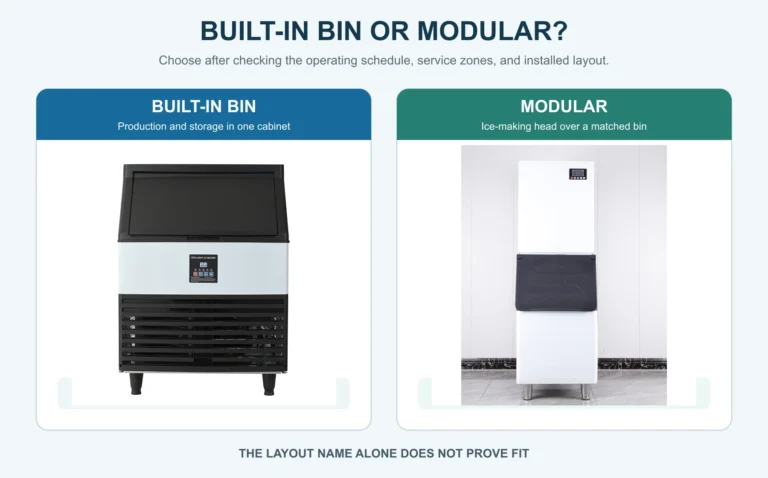
That review needs a machine name. When a KAISON buyer chooses a built-in-bin ice machine or a separate-bin ice machine, the supplier should identify the applicable water path and cleaning instructions before any softening or scale-control proposal is approved.
Use TDS and conductivity as broader screening data
TDS shows a broader dissolved-solids picture. Conductivity offers a fast indication of ionic content, but its meaning depends on the dissolved substances, measurement method, temperature handling, and the local water source.
Use those numbers to ask better questions. They do not replace a laboratory report, an approved treatment design, or a model-specific manual. If readings change after installation, compare the same sampling point and method before concluding that the machine or filter caused the difference.
| Measurement | Useful question | It cannot prove alone |
|---|---|---|
| Hardness | Is calcium/magnesium mineral exposure relevant to scale planning? | Total dissolved-solids composition or filter compatibility |
| TDS | Is the overall dissolved-solids picture changing between tested samples? | Which ions are present or whether a machine accepts the water |
| Conductivity | Is ionic content changing at the same sampling method and temperature basis? | Exact TDS, hardness, or treatment performance |
| Visual sediment observation | Is particulate loading visible at the sample point? | Potable-water safety or dissolved-mineral concentration |
Match the Filter to a Stated Water Problem
Choose treatment by the documented concern, not by appearance alone.
Every filter has a job. That written proposal should link the reported concern to the intended reduction, compatible flow, available pressure, connection layout, replacement trigger, exact cartridge identifier, and service access for the proposed machine under expected operating conditions. Ask the treatment provider to state the target concern, reduction claim, rated treated-water capacity, pressure conditions, replacement trigger, connection method, and exact cartridge model.
Confirm what the proposed filter is designed to reduce
Filter claims must be specific. Sediment, taste and odour, disinfectant residual, particular dissolved substances, and microorganisms are different treatment questions, so one device should not be assumed to solve all of them.
The published product selection still needs an installation review. Use a relevant product page, such as the KX-78 cube ice machine, to identify the equipment family, then obtain the current manual and written treatment compatibility for the offered configuration.
Check treated-water flow and service access
Flow after treatment is operational. A cartridge can be appropriate for a reported concern yet still create an installation problem if its pressure drop, service position, or replacement plan conflicts with the selected machine.
The treatment schedule should record inlet pressure, post-filter pressure, cartridge code, installation date, change reason, and the person who completed the work. Place valves, housings, and gauges where trained staff can inspect them without blocking cleaning panels or bin access. Replace components by the documented treatment system instruction and observed condition, not by a calendar copied from another installation.
| Field | Required written answer |
|---|---|
| Water concern | Test result, sampling point, and date |
| Treatment device | Manufacturer, model, cartridge, and stated reduction claim |
| Hydraulic data | Rated flow, pressure conditions, and expected pressure drop |
| Service plan | Inspection trigger, replacement procedure, and record owner |
| Machine review | Exact ice-machine model, manual revision, and written compatibility confirmation |
| Drainage review | Discharge route, access, and local compliance responsibility |
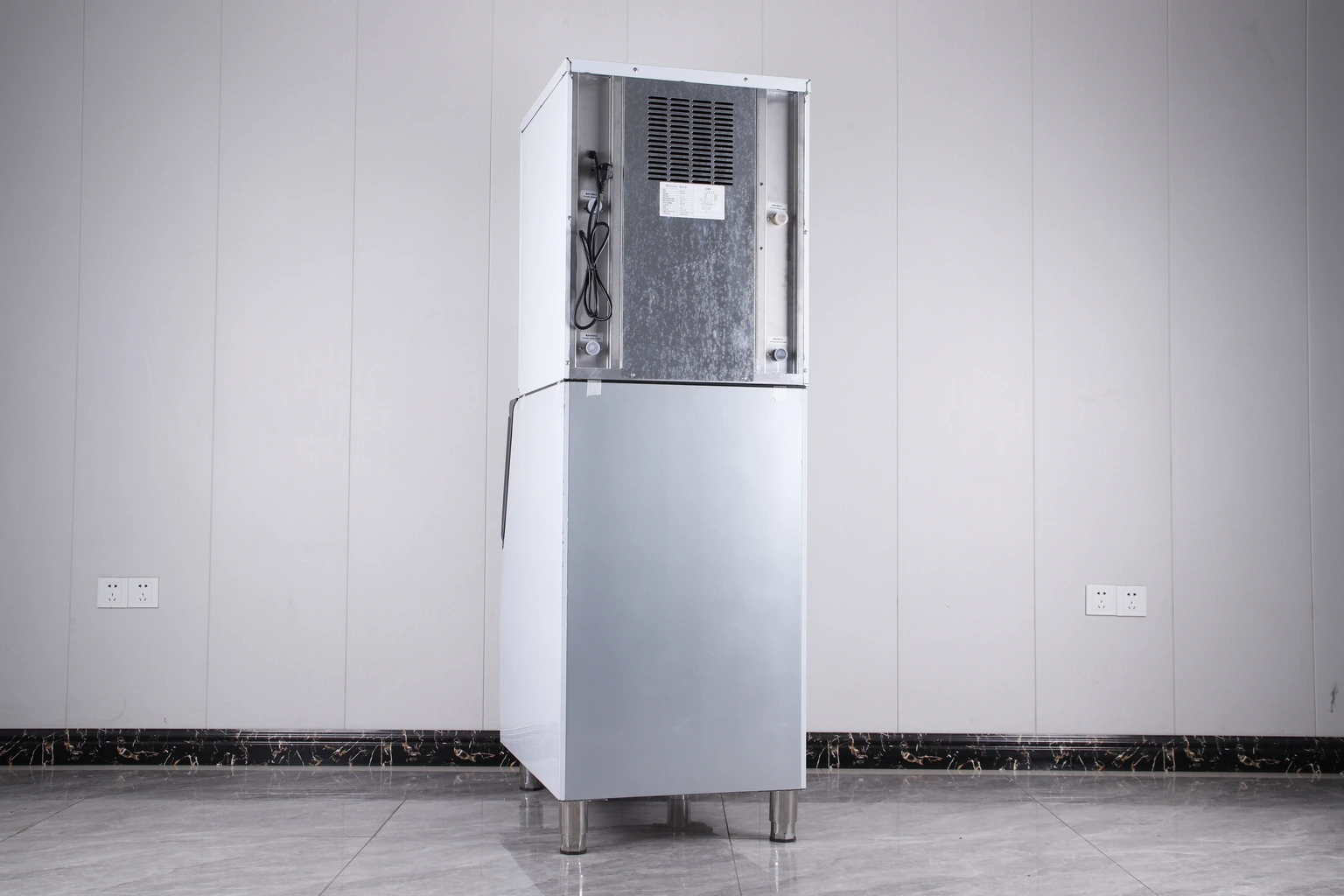
Treat Purge as a Controlled Operating Function
Purge controls concentration only when the selected machine supports it.
Do not improvise. A purge, drainage, or flush sequence can remove water from a defined part of a machine, but it does not identify contaminants, correct unsuitable treatment, or make an unsupported water source acceptable.
The control method must be documented. A KAISON buyer should request current controller documentation before a drainage change. One flow-type controller manual describes drainage-cycle and drainage-time fields, but its range and default do not establish a setting for every model, revision, or ice-making configuration.
Confirm the control before changing any setting
Purge settings are configuration-specific. Ask for the current controller documentation, the factory value, permitted adjustment range, trigger sequence, expected drain behaviour, and the person authorised to approve a change.
Use a documented escalation path. If scale, poor water flow, unusual ice appearance, or repeated drain symptoms appear, record the model, controller display, sample point, filter condition, and service history before changing a parameter.
Design the drain route for the actual machine
Drainage has physical consequences. A machine may require gravity drainage, a defined hose position, or a separate arrangement for a water-cooled condenser, so drain routing must be checked against the current installation drawing.
For a KM-78 cube ice machine, request the specific installation sheet before approving the drain. Do not use a controller manual or a different product’s hose diagram as an installation drawing. Local plumbing, backflow, discharge, and food-service rules remain the installer’s responsibility.
Apply Manual Scope Before Using a Number
Use model-specific instructions before applying any water or drainage value.
Scope matters.
Numbers are only useful with scope. The current KS/KX/KW manual states 0.1–0.5 MPa water-supply pressure and gravity drainage for the models it covers. It does not make that range a universal acceptance limit for every product.
The same discipline applies to filter intervals and controller values. One integrated-cube manual describes a supplied quick-connect filter and regular replacement, while a general flow-control manual describes drainage parameters. Match each statement to the offered model, current document revision, voltage, controller, and site configuration before release.
Before release, the project team should confirm the exact model, document revision, voltage, supply arrangement, drain method, controller, water-treatment components, and site utility conditions against the manufacturer instructions for that offered configuration.
Use model pages to start, not finish, a specification
Product pages help shortlist. The AP-300P cube ice machine page can begin a capacity and configuration conversation, but it cannot replace the installation drawing, site water record, or selected treatment documentation.
Apply the same rule to compact equipment. The AP-25BT cube ice machine may suit a different service pattern, yet pressure, drainage, filter access, and cleaning requirements must still follow the version supplied with that exact machine.
Commission the Installation and Keep a Service Record
Commissioning turns water decisions into repeatable site controls.
Make the first inspection practical. Verify the nameplate, water source, treatment components, post-filter pressure, drain route, controller status, and ice appearance before regular service begins. Photograph the treatment layout and label the isolation valves, cartridge housings, gauges, and drain connection for the site record.
At handover, the responsible team should be able to identify each water component, confirm its purpose, locate service points, and compare the installed arrangement with the approved drawing and current manual before accepting operation.
Build one record for purchasing, installation, and service
One record prevents handover gaps. A restaurant ice maker project may have a concentrated beverage peak, while a cafe ice machine project may share planning with coffee-water treatment and counter access. Confirm whether a gourmet ice machine is selected before finalising the exact configuration.
Use the same document for the supplier, installer, and operator. Include model and serial number, water report, treatment components, pressure observations, drain photographs, manual revision, cleaning plan, and escalation contact. A KAISON hotel ice machine installation may also need the record to identify separate public, kitchen, and back-of-house service routines.
Request a written response before the purchase order
Written confirmation reduces assumptions. Ask the supplier to identify which manual applies, what treatment claims are compatible, what water and drain fields must be verified, and which changes require engineering approval.
Review the applications overview when matching ice supply to the operating setting, then use the quality-control page to frame the document request. The final enquiry should include the current report, site photographs, utility details, and the exact configuration required.
- Hardness is a calcium-and-magnesium measure; TDS describes a broader dissolved-solids picture.
- A filter proposal needs a named reduction claim, rated hydraulic conditions, cartridge model, and service record.
- The KS/KX/KW manual scope states 0.1–0.5 MPa supply pressure, 5–35°C inlet-water temperature, and gravity drainage; confirm the current model manual before use.
- One flow-controller manual lists drainage fields for 00–10 trays and 5–50 seconds; do not treat those values as universal defaults.
- Commissioning records should capture the water report, treatment layout, pressure observations, drain route, controller status, and manual revision.
Frequently Asked Questions
Start every answer with the selected model and site record.
Use the same evidence every time. A current manual, water report, treatment specification, pressure observation, and drain layout give a supplier or service team a usable starting point. They also prevent a generic recommendation from becoming an installation instruction for a different controller or machine family.
Q: What water tests should I provide before selecting treatment for an ice machine?
Provide the most recent source-water report, the sampling point, the test date, and the method used. Include hardness, TDS or conductivity when available, plus any reported sediment, disinfectant, chemical, or microbiological concern. Send the exact machine model, controller version if known, operating schedule, existing treatment, and drain layout with the report. The supplier or treatment provider can then map the result to the selected equipment. A city name, a photograph of cloudy ice, or a taste description alone does not replace a test record.
Q: Is TDS the same as hardness for a commercial ice machine?
No. Hardness generally concerns dissolved calcium and magnesium, while TDS is the broader total of dissolved substances in water. A high TDS result may include calcium and magnesium, but it can also include other ions and dissolved material. Use hardness to discuss scale-related mineral exposure and use TDS or conductivity to describe a wider dissolved-solids picture. Neither number proves filter compatibility or machine acceptance by itself. The current model documentation and the treatment provider’s written proposal still control the installed solution.
Q: Can a standard water filter solve every ice-machine water problem?
No. A filter has to be selected for a stated concern and a stated reduction claim. Sediment, taste and odour, disinfectant residual, dissolved substances, and microorganisms are different treatment questions. Check the device label, rated flow, pressure conditions, cartridge capacity, installation orientation, and replacement instructions. Then confirm that the treatment arrangement is compatible with the selected ice machine. A generic filter should not be described as a complete water-safety solution or as a substitute for cleaning, maintenance, or a current water report.
Q: Should I increase purge when the water is hard or high in TDS?
Do not change a purge or drainage setting from a general rule. Some controllers use drainage-cycle or drainage-time controls, but the permitted setting, trigger sequence, and water-use effect depend on the machine and controller version. Start by recording the water report, visible scale, filter condition, inlet and post-filter pressure, drain route, and current controller status. Request the current manual and written KAISON guidance for the exact model. Treatment, cleaning, plumbing, or a component fault may need attention before any control adjustment.
Q: How do I know whether treatment reduces water flow too much?
Measure the water delivery at the correct points. Record the inlet pressure, the post-filter pressure, the filter model, the cartridge condition, and the machine’s observed operation under normal demand. Compare those records with the current installation documentation for the selected model. A pressure loss can come from a loaded cartridge, an undersized treatment device, a restricted valve, a shared supply, or site plumbing. Replace or redesign components only after the cause is identified, then retain the readings in the service record.
Q: When should an ice-machine filter cartridge be changed?
Follow the exact cartridge manufacturer’s replacement instructions and the site record. A calendar interval can be one input, but treated volume, pressure change, sediment loading, water condition, and the machine’s operating symptoms can matter too. Record the cartridge model, installation date, change date, reason, pressure observations, and the person completing the service. If a cartridge is damaged, contaminated, blocked, or affected by a plumbing event, follow the manufacturer’s replacement and sanitation instructions before returning the machine to normal service.
Q: Does a water-cooled ice machine need the same water review?
It needs a water review, but the water paths must be separated. Ice-making water requires the selected model’s water-quality, treatment, pressure, and drain review. A water-cooled condenser may add a separate supply and discharge arrangement with different operating and local-code questions. Do not assume the ice-making treatment device covers the condenser circuit or that the condenser circuit sets the ice-making specification. Request the installation drawing and confirm each connection, discharge route, isolation point, and service responsibility before installation.
Q: What should I send with a commercial ice-machine water-quality enquiry?
Send the exact model or required capacity, voltage and frequency, ice type, water source, and current water report. Add the existing or proposed treatment, filter model, observed pressure if known, drain photographs, expected daily operating pattern, and any scale or service symptoms. Include the destination and site contact so local installation questions can be resolved. Use the contact page to submit the package and request a written response that identifies the applicable manual, configuration, and next verification step.