KAISON Team
Commercial ice machines use refrigeration to remove heat from water, then release or continuously collect the finished ice. The sequence depends on the ice type and evaporator design. This guide explains the main components and operating stages so you can discuss equipment specifications and service requirements with your supplier.
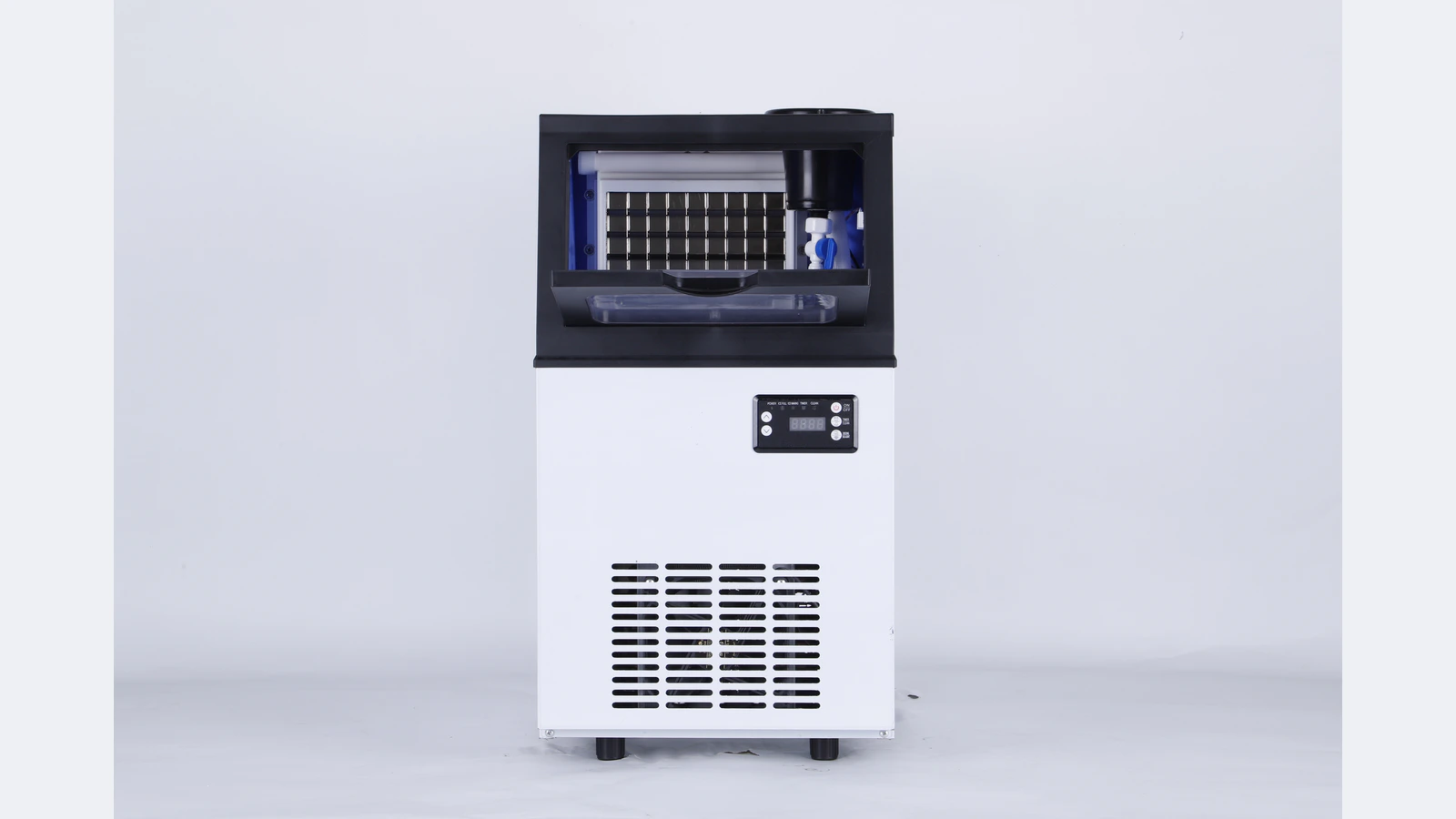
How Does a Commercial Ice Machine Work in One Cycle?
A cube machine completes five controlled stages during each production cycle.
Water Fill and Level Control
The cycle begins when the water system reaches its required level. A float or level-control device calls for water, the inlet solenoid opens, and the valve closes after the reservoir reaches the set point.
Water comes first.
The inlet, reservoir, pump, distribution path, and drain must suit the installation because unstable pressure, blocked drainage, or incorrect leveling can interrupt water coverage even when the refrigeration circuit operates normally.
Compare water and drain requirements for each commercial ice maker.
Water Circulation Over the Evaporator
After the fill stage, a pump moves water to the evaporator. Water then travels from the upper distribution area down the freezing surface and back to the tank.
Coverage must stay even.
Recirculation exposes the same water to repeated cooling while unfrozen water returns to the reservoir, helping the machine build ice on the intended evaporator surface instead of relying on one uncontrolled pass.
Evaporator geometry varies by cube ice machine model.
Refrigeration Removes Heat from the Water
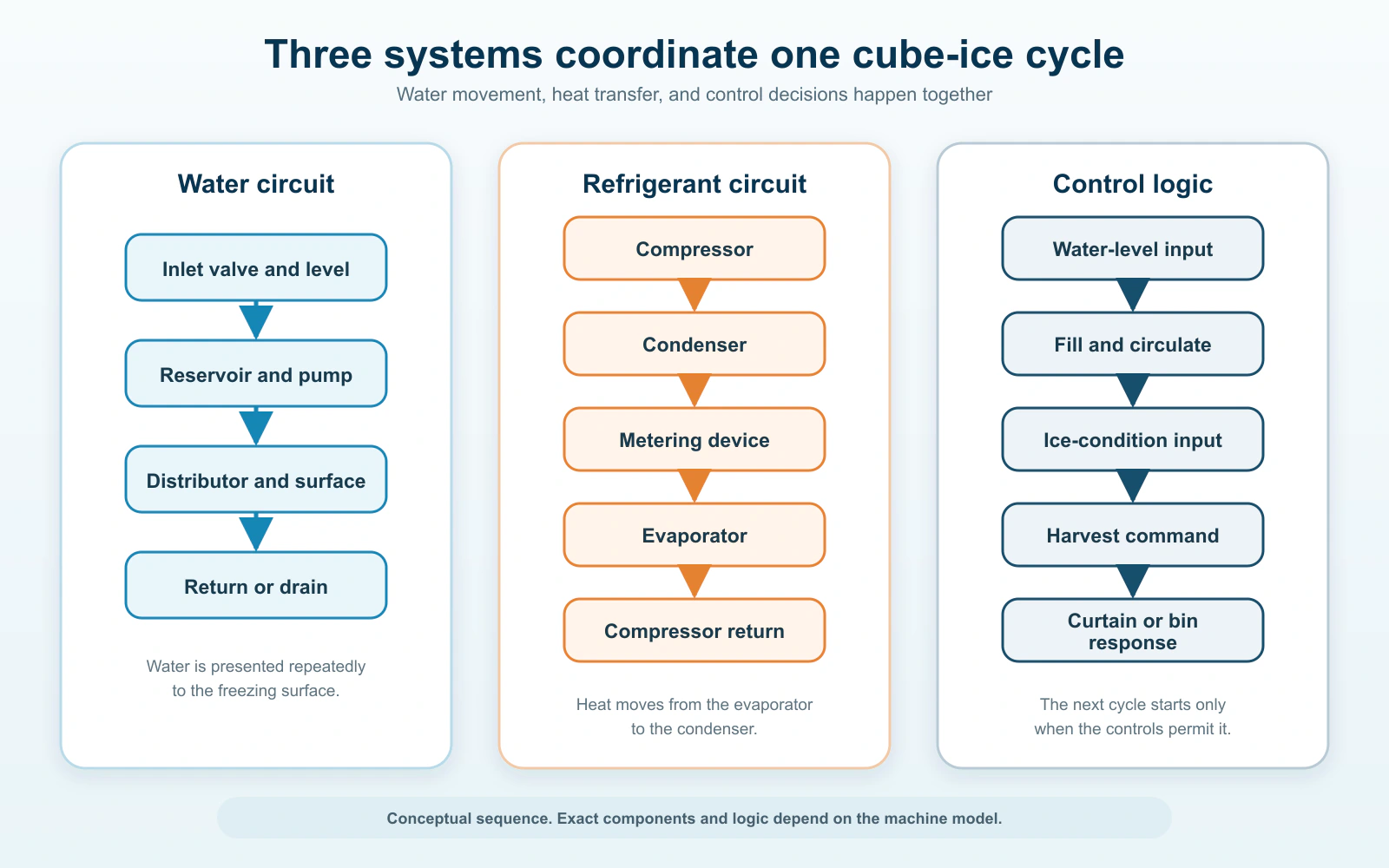
The compressor raises refrigerant pressure and moves vapor toward the condenser. The condenser rejects absorbed heat, the metering device reduces pressure, and the evaporator receives cold refrigerant that absorbs heat from the circulating water.
Heat moves out.
These components form a sealed circuit, so compressor input, whole-machine power, cooling capacity, and ice output remain separate specifications that must be read with the applicable voltage, frequency, refrigerant, and condenser configuration.
Match compressor details through the commercial ice machine compressor guide.
Ice Thickness Triggers Harvest
Cube ice must reach the control condition selected for the machine. A thickness detector or related control input signals that the freezing phase is complete and allows the controller to change the refrigeration sequence.
Timing alone is insufficient.
Incoming water temperature, room temperature, condenser conditions, mineral buildup, and water distribution can change how quickly ice develops, which is why a fixed clock reading cannot prove correct cube formation across every installation.
Ice Release, Curtain Response and Bin Stop
During harvest, the evaporator warms enough to release the formed cubes. Gravity carries the sheet or individual cubes into the bin, where their movement opens the water curtain or deflector before it returns to its operating position.
That return matters.
When the curtain can reset, the next cycle begins; when stored ice prevents the control from returning, the machine stops production until the bin condition permits another safe cycle.
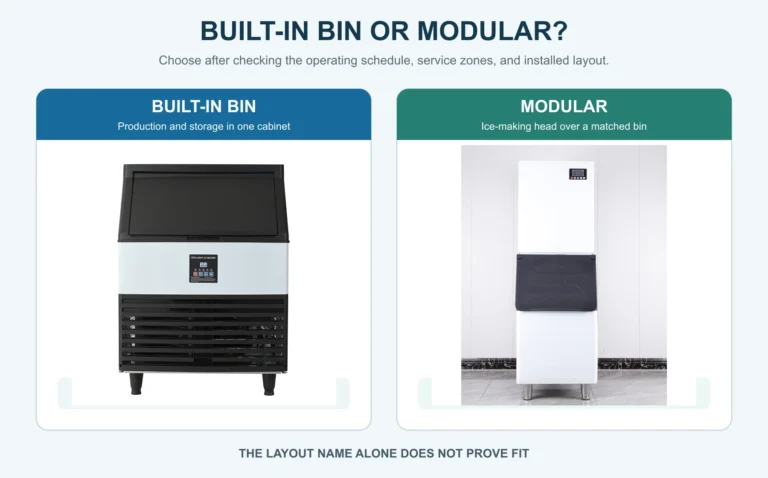
Production and storage controls share one cabinet in a built-in bin ice machine.
Three Systems Work at the Same Time
Commercial ice production depends on three coordinated systems operating together.
The Water Circuit
The water circuit manages filling, circulation, distribution, and drainage. It places water on the freezing surface and removes unwanted water.
The route is visible.
Operators can check whether water enters, spreads across the intended surface, returns to the reservoir, and leaves through an unobstructed drain without opening the sealed refrigeration circuit or changing protected settings.
The Refrigerant Circuit
The refrigerant circuit transfers heat from the evaporator to the condenser. Its compressor, condenser, metering device, evaporator, tubing, and approved charge work as one engineered assembly.
The circuit stays sealed.
Because refrigerant type, charge, component approval, and pressure conditions are configuration-specific, circuit service belongs to qualified technicians using the applicable machine documents and destination-market requirements.
The documented factory leak-testing process places circuit control before evacuation, charging, operation, and final release.
Sensors and Control Logic
Controls decide when each mechanical action may begin or stop. Level sensing governs filling, an ice condition input initiates harvest, and the bin device prevents continued production when stored ice blocks its normal position.
Sequence protects the machine.
A sensor, connection, or operating condition can appear as a water, freezing, harvest, or restart fault.
A KT-36 Cycle Under Measured Conditions
This KT-36 example links cycle measurements to daily output.
Tested Configuration
In a September 18, 2023 KT-36 test, KAISON recorded a 4 by 9 cube grid, an FKA40ML compressor, 220V/50Hz supply, 203.8 W input, 10°C inlet water, and the default control setting for this configuration.
The test links the machine configuration, water temperature, electrical supply, batch mass, and complete cycle time so buyers can understand how the reported daily output was calculated for that operating condition.
Configuration defines the result.
Use the current KT-36 product page when reviewing a new quotation.
One Complete Cycle at 20°C Ambient
At 20°C ambient temperature, the recorded complete cycle lasted 15.25 minutes. The sample produced 325 g per batch, with 9.03 g recorded for each cube position, and the cycle-derived result was 30.69 kg per 24 hours.
The calculation is direct.
| Input | Recorded value |
|---|---|
| Batch mass | 0.325 kg |
| Complete cycle time | 15.25 minutes |
| Minutes per day | 1,440 |
| Formula | 0.325 × 1,440 ÷ 15.25 |
| Cycle-derived output | 30.69 kg per 24 hours |
What Cycle-Derived Output Means
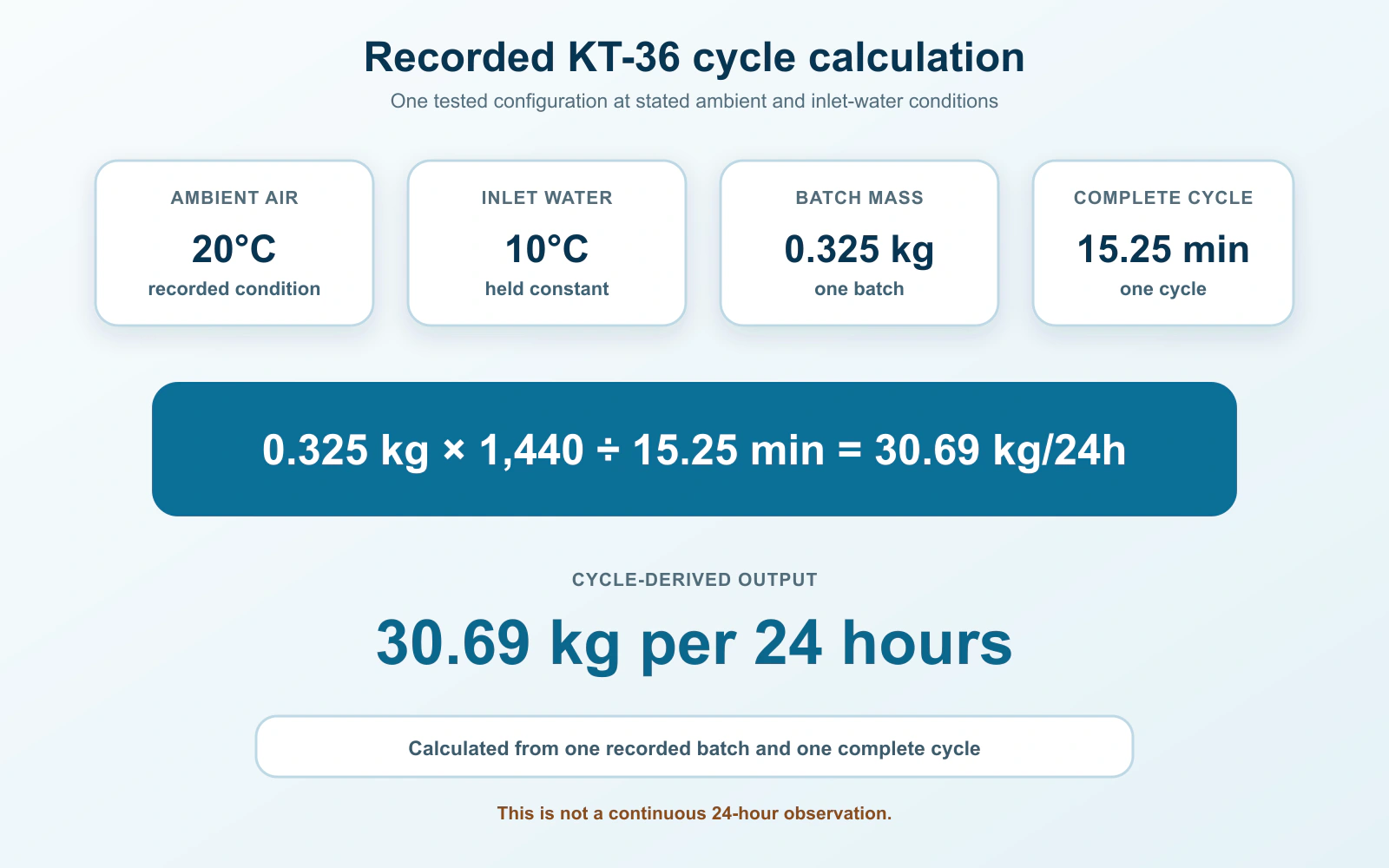
Cycle-derived output converts one batch and one complete cycle into a daily rate. Actual production changes with ambient temperature, inlet-water temperature, airflow, scale, and installation conditions.
Conditions change production.
The temperature and ice-output test article records longer cycles and lower batches at higher ambient temperatures.
Where the Removed Heat Goes
Every ice-making system must reject the heat removed from water.
Air-Cooled Condensers
An air-cooled condenser moves room air across its heat-exchange surface with a fan. The installation must preserve the specified intake, discharge, and service clearances around the cabinet so heated air can leave without returning directly to the condenser inlet.
Airflow affects output.
For an air-cooled ice machine, blocked fins or recirculated hot air can extend freezing.
Water-Cooled Condensers
A water-cooled condenser transfers refrigeration heat to a separate water stream that needs an approved supply, control, discharge route, and compliance review apart from potable ice-making water at the installation site.
Two water paths exist.
Review a water-cooled ice machine where the project defines suitable condenser-water infrastructure.
Why Configuration Must Be Named
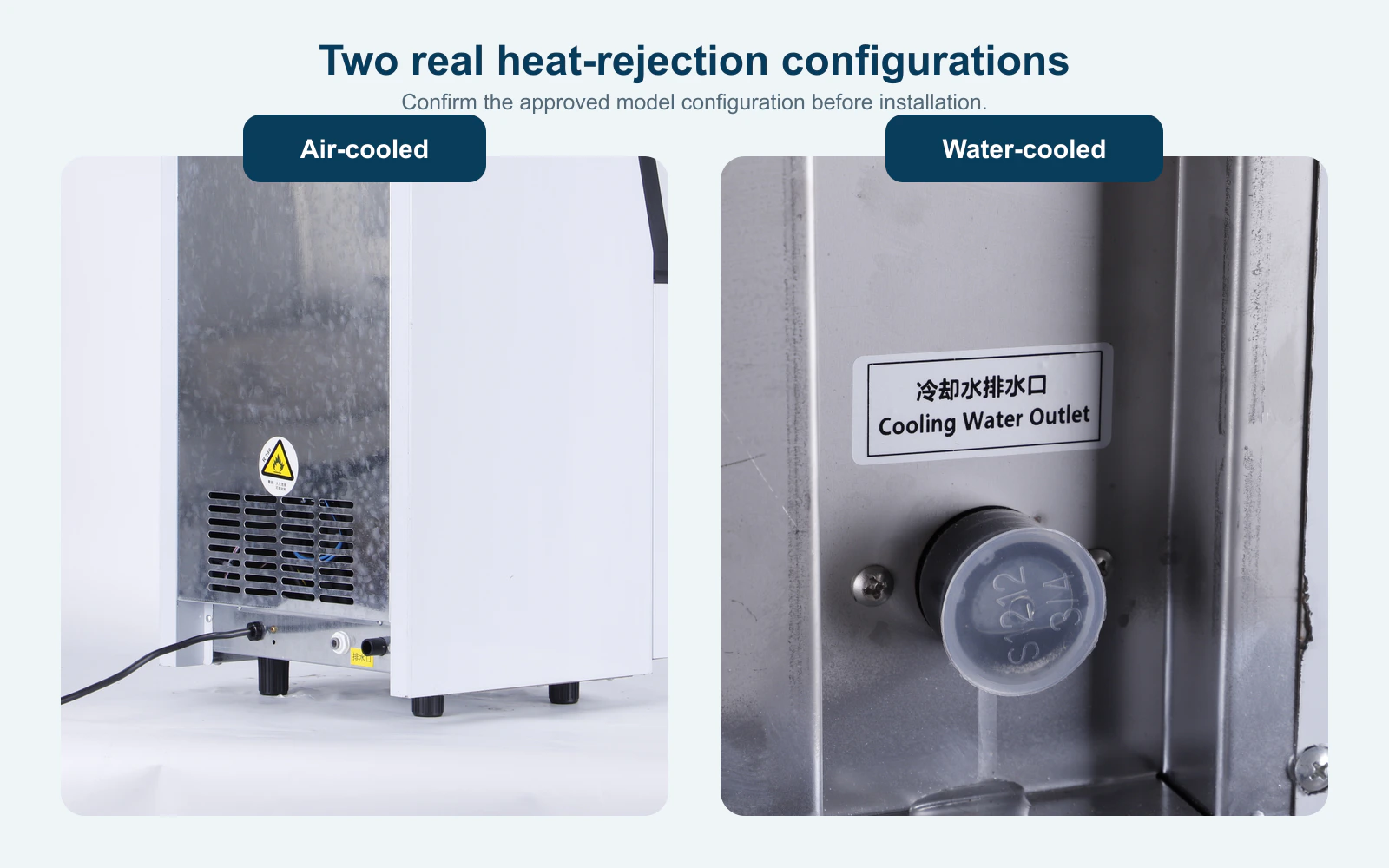
The condenser type changes installation duties and heat rejection. Buyers should identify it in the RFQ, quotation, approved specification, and utility plan instead of assuming that every machine with the same nominal output connects identically.
Names prevent mistakes.
Compare site requirements through the air-cooled versus water-cooled guide.
Why One Working Principle Does Not Cover Every Ice Type
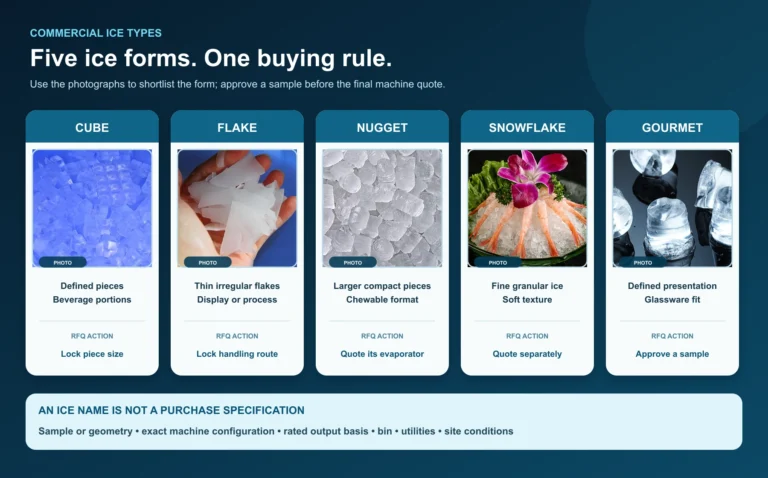
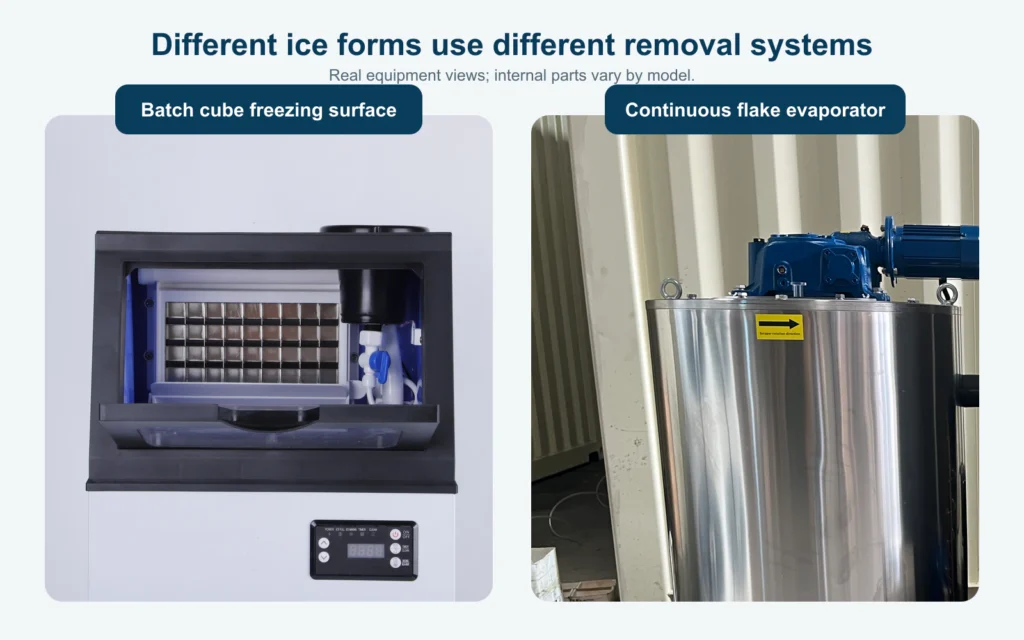
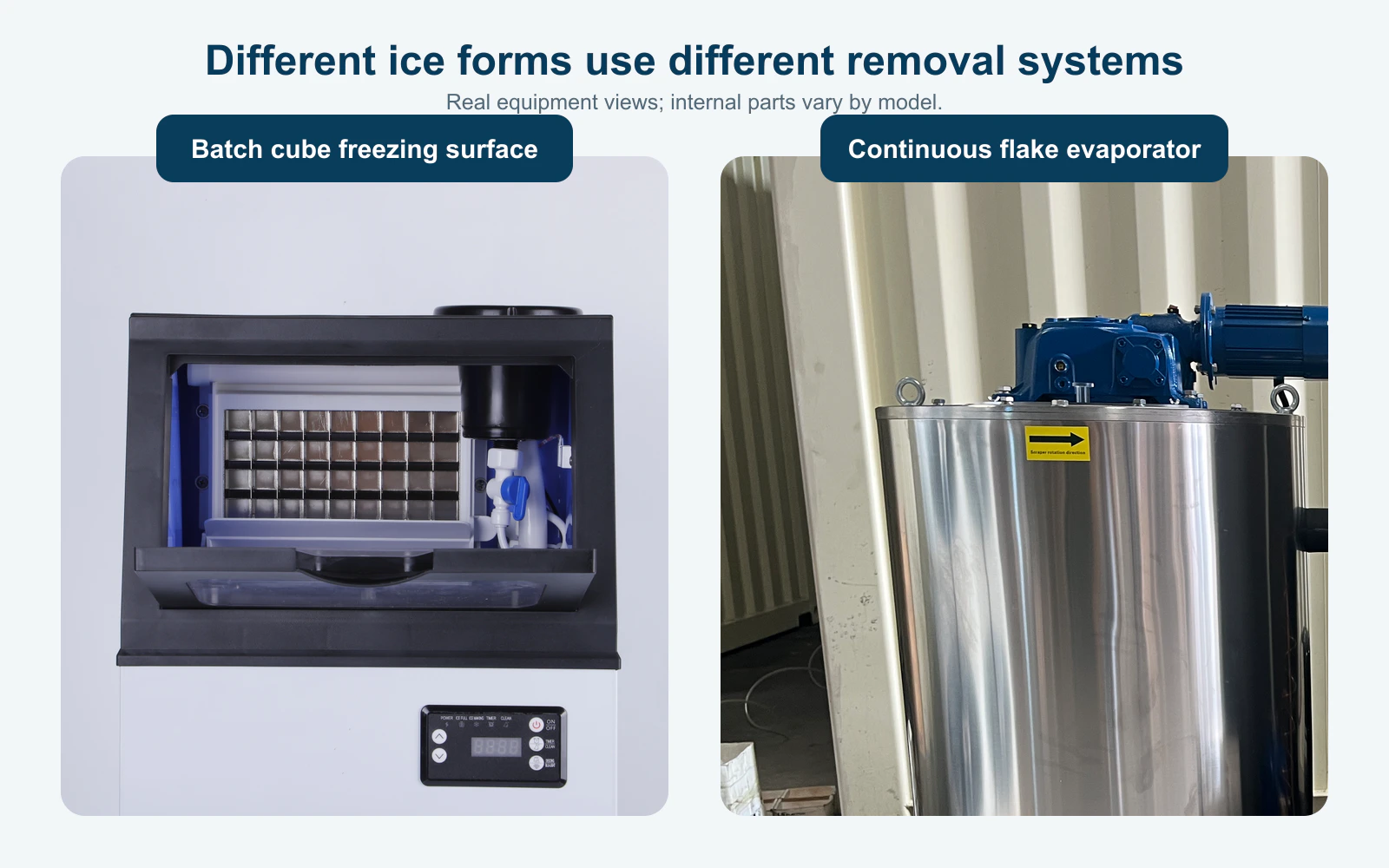
Different ice forms require different evaporators and removal methods.
Cube Ice Uses a Batch Freeze-and-Harvest Cycle
Cube production has a visible beginning and end for each batch. Water circulates over a shaped evaporator, ice develops to the control condition, harvest releases it, and the bin receives the finished cubes.
The cycle repeats.
Complete cycle time and batch mass support calculation when both come from one model, setting, water temperature, ambient condition, and test.
Flake Ice Uses Continuous Ice Removal
Flake equipment forms a thin frozen layer on an evaporator and removes ice continuously with a scraper mechanism. It does not wait for a complete cube sheet to enter a separate batch harvest event.
Its motion is different.
KAISON presents this pattern in its flake ice machine range for product cooling, processing, and display.
Specialty Ice Requires Model-Specific Confirmation
Snowflake equipment belongs to a distinct product family, so its feed system, freezing assembly, and discharge arrangement should be confirmed from the exact technical file supplied with the offered model.
Do not generalize.
Buyers can begin with the snowflake ice machine category, then request an operating diagram, utilities, refrigerant configuration, cleaning method, and sample ice evidence for the quoted machine.
| Ice type | Water presentation | Ice removal pattern | Output record to request |
|---|---|---|---|
| Cube | Water circulates across a shaped evaporator | Batch harvest after the control condition | Complete cycle time, batch mass, and stated test conditions |
| Flake | Water freezes as a thin layer on an evaporator | Continuous mechanical scraping | Timed production result and stated test conditions |
| Snowflake | Defined by the quoted model | Defined by the quoted model | Model-specific process diagram and timed production result |
What Buyers Should Check Beyond the Diagram
A working-principle diagram cannot approve a commercial installation by itself.
Output and Test Conditions
Nominal daily output becomes comparable only when the supplier states ambient and inlet-water temperatures, voltage, frequency, model configuration, observation method, and whether the figure is measured or cycle-derived for the cited test.
Context makes numbers comparable.
The commercial ice maker selection guide connects required ice volume with operating conditions and storage needs before a buyer compares nominal capacities.
Electrical and Refrigeration Configuration
The approved specification should identify voltage, frequency, phase, refrigerant, charge, compressor, condenser method, and whole-machine input for the unit. These fields prevent a familiar model name from hiding an order-specific electrical or cooling change.
Read them together.
The supplier can map these fields to the destination during quotation, while the quality-control overview explains factory release.
Drainage, Ventilation and Service Access
Ice machines need a reliable water inlet, suitable drain fall, condenser clearance, and access for cleaning and service. A tight site can satisfy cabinet dimensions yet fail the utility and airflow requirements around that cabinet.
Space has functions.
Use the commercial ice machine installation requirements to collect site details before ordering a compact unit or planning a separate bin ice machine installation.
Cleaning and Factory Release
Water-contact parts require routine cleaning according to the supplied model instructions, while refrigeration repairs require trained service work. Before shipment, production checks should connect the finished model and configuration with operational results and release records.
Both protect performance.
The commercial ice machine cleaning guide covers the operator-side maintenance boundary, and buyers can use the contact page to request a model-specific quotation and technical document set.
What Operators Can Observe Safely
Routine observation helps isolate symptoms before qualified service begins.
Observable Operating Checks
An operator can note whether water enters, circulation begins, the evaporator develops ice, harvest releases it, the curtain returns, and the bin control stops production when ice reaches its sensing position.
Record the sequence.
Time, ambient conditions, inlet-water temperature, alarm codes, visible water flow, and a short video give a service team more useful evidence than a general statement that the machine has stopped making ice.
Technician-Only Work
Opening a sealed circuit, changing refrigerant, adjusting protected controls, testing live electrical components, or replacing refrigeration parts requires qualified service personnel working from the exact model documentation.
Stop at the boundary.
Operators should isolate unsafe equipment and provide the model, nameplate, installation conditions, sequence observations, and service history so the technician can diagnose the water, refrigeration, or control system efficiently.
- A cube ice machine coordinates water circulation, refrigerant heat transfer, harvest control, and bin sensing during every batch.
- The tested KT-36 configuration completed one cycle in 15.25 minutes at 20°C ambient with 10°C inlet water.
- A 0.325 kg batch divided by 15.25 minutes and multiplied by 1,440 gives 30.69 kg per 24 hours on a cycle-derived basis.
- Air-cooled and water-cooled condensers reject heat through different site utilities and must be named in the approved configuration.
- Flake machines remove ice continuously, while cube machines use distinct freezing and harvest phases.
How does a commercial ice machine make ice?
A commercial cube machine admits water to a reservoir, pumps it across a refrigerated surface, and removes heat through a compressor-based circuit. Sensors or controls identify when the ice has reached the intended condition. The machine then changes into a release stage, allowing the cubes to fall into storage. A curtain or bin device confirms whether another batch can start. Flake equipment uses a separate continuous scraping process, so its operating sequence should be reviewed by model.
Why does a commercial ice machine circulate water?
Circulation repeatedly brings water into contact with the cold evaporator and returns unfrozen water to the reservoir. This controlled route supports coverage across the freezing area and allows the machine to build ice during the batch. Uneven flow can leave sections underfed or change the time needed to reach the harvest condition. Water pressure, the pump, distributor, reservoir level, cleanliness, and cabinet leveling can all influence the visible flow pattern an operator observes.
What starts the harvest cycle in a cube ice machine?
Harvest begins when the machine's control system receives the specified ice-condition signal, commonly from a thickness-related device or another model-specific input. The refrigeration sequence then changes so the formed cubes can release from the evaporator and fall into the bin. A timer may participate in control logic, but elapsed time alone should not be treated as proof of correct ice formation across changing water, ambient, and condenser conditions.
Where does the heat from the water go?
The evaporator absorbs heat from the water into the refrigerant. The compressor moves and raises the pressure of the refrigerant vapor, and the condenser releases that heat through air or a dedicated condenser-water circuit. The metering device then prepares the refrigerant to absorb heat again at the evaporator. Installation planning must provide the airflow or water-side utilities required by the ordered condenser arrangement, including appropriate discharge and service access.
Does a flake ice machine work like a cube ice machine?
Both systems remove heat through refrigeration, yet their ice-forming and removal actions differ. A cube unit forms a batch on a shaped surface and switches into a release event. A flake unit freezes a thin layer and removes it continuously with a scraper mechanism. Buyers should not use cube batch time to judge flake production. Request a timed output result, operating conditions, evaporator information, and maintenance instructions for the exact flake model offered.
Why can commercial ice output change in a hot room?
Higher ambient temperature can make an air-cooled condenser reject heat less effectively, extending the time required for a complete cycle. Warm inlet water adds another heat load before freezing begins. Air recirculation, dirty condenser fins, restricted clearance, scale, and unstable water flow can further influence performance. Capacity comparisons should therefore name the room temperature, inlet-water temperature, electrical supply, condenser configuration, setting, and measurement method used for each stated result.
What specifications should a buyer confirm before ordering?
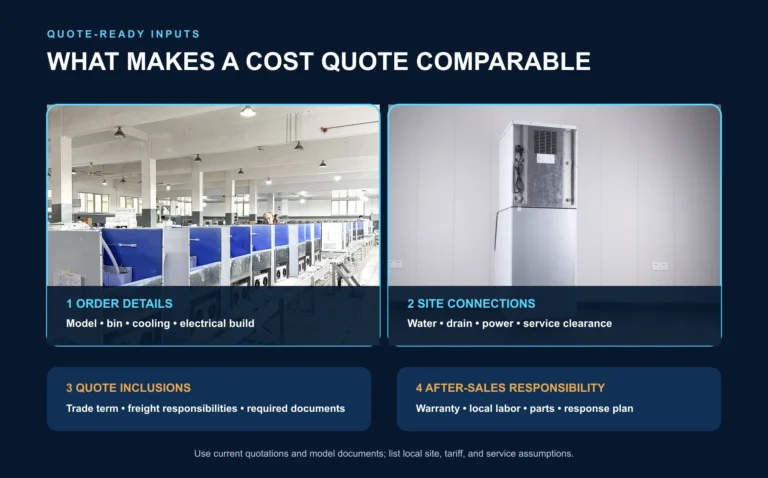
Confirm the model, ice type, rated production conditions, storage capacity, cube or flake format, voltage, frequency, and phase. Record the specified refrigerant and charge, compressor, condenser method, water connection, drainage, dimensions, ventilation clearance, and service access. The quotation and approved specification should describe one consistent configuration. Buyers should also request the applicable performance record, inspection documents, cleaning instructions, spare-parts plan, warranty scope, production lead time, and packaging details for the destination.
What should an operator check when the machine stops making ice?
Record the model and alarm display, then observe whether water enters, the pump circulates, ice develops, harvest occurs, the curtain moves back normally, and stored ice blocks its sensing position. Note room and inlet-water conditions, unusual sounds, visible leaks, and the time of each event. Do not open the sealed refrigerant circuit or adjust protected electrical controls. Give the observations, nameplate photo, installation view, and recent cleaning or service history to a qualified technician.